About the Science Programme
Background and Partners
Cape Farewell exists because Director and Founder David Buckland read an article by a NASA scientist who said the window of opportunity for dealing with climate change was very short, perhaps less than 10 years. He started to investigate it further and there was a huge frustration with climate scientists who knew there was a problem, but couldn't find a way to communicate it to the public, partly because there were no images or succinct message about climate change. The ambition for Cape Farewell was to create a new bank of ideas, of imagery, of writing - to find a new language to talk about climate change.
Since the organisation's conception, the knowledge about climate change and science research has directly influenced our programme of activity. The location of our expeditions are led by the science and the artwork and ideas that develop are founded in scientific research. We work with organisations across the UK and internationally to ensure that our work is founded in science. Partner organisations include University College London, Environmental Change Institute Oxford University, National Oceanography Centre, Scottish Association of Marine Scientists and British Geological Survey.
The relationship between the art and science
Through our exhibitions and events programme, film, book and youth programme it is clear to see how the artists and young people we have worked with have been effected by the science of climate change. All our artists have in someway been inspired to respond to the Arctic environment. But our approach also inspires the scientists who work with us to think differently about the how they work. We pioneer an interdisciplinary approach to inviting the artists and scientists to work together.
Science programme during the 2007/2008 expeditions
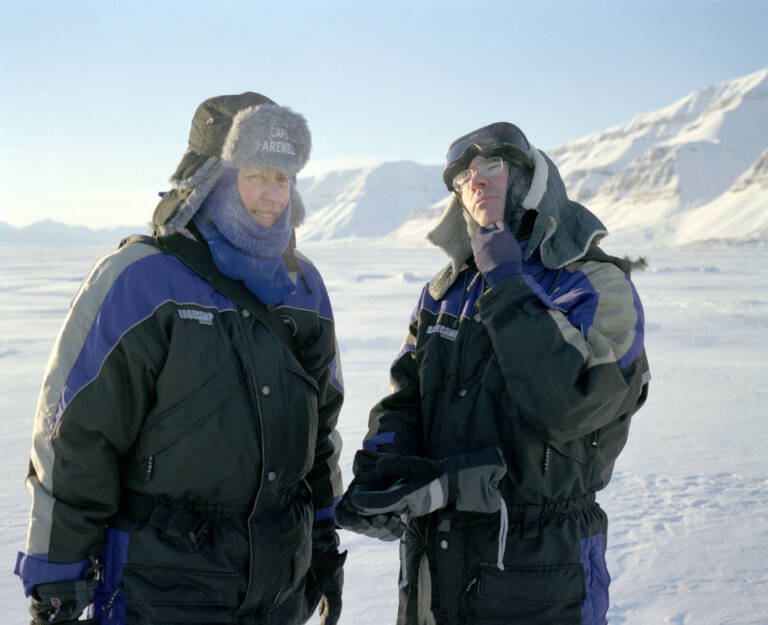
For the science programme during the 2007 and 2008 expeditions, Cape Farewell is working with the National Oceanography Centre, British Geological Survey and Scottish Association for Marine Science. You can follow the scientists at work via our daily blogs and images from the Arctic.